Can the Prime Minister Refuse to Answer Parliament? The Legal Procedure in Nepal

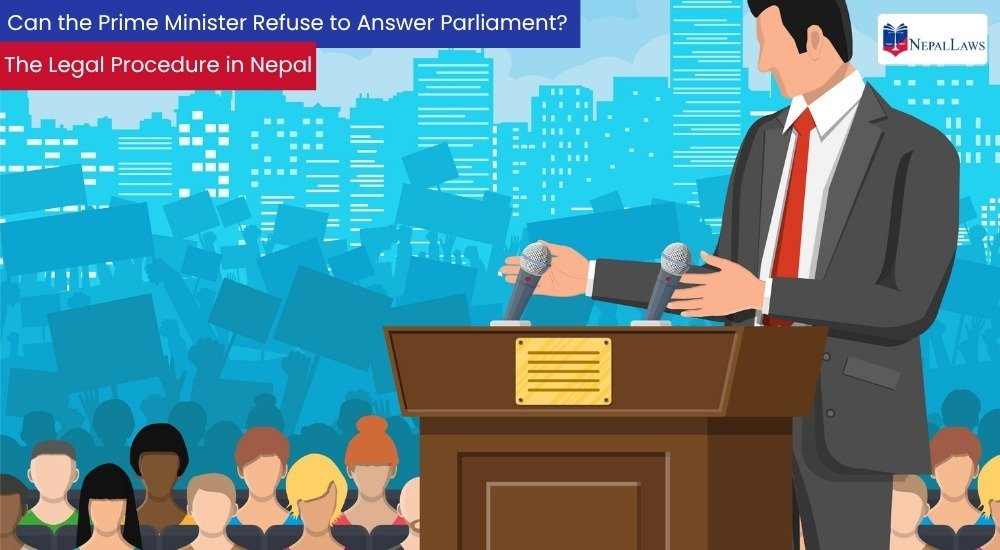
Yes, Nepal’s Prime Minister has the legal authority to refuse to answer a lawmaker’s question, but this right is strictly limited to cases where providing the information would go against the national or public interest.
So, is the current situation in the House of Representatives an extension of a legitimate right or a sign of an executive dodging oversight? Let’s find out.
Introduction
Holding the executive branch accountable is a core principle in any parliamentary democracy. In Nepal, the House of Representatives Rules 2079 provides the legal guidelines for lawmakers to question the Prime Minister directly. Chapter 9 of these Rules sets out the procedures, the rights of members, and the obligations of the Prime Minister to promote transparency. This article explains the step-by-step legal process for questioning the Prime Minister in Parliament, including the specific situations when the Prime Minister must answer or may decline to respond.
Foundation and Scheduling of the Session
To ensure that the executive remains answerable, the law requires a regular and clearly defined time for the PM to appear before the House. According to Rule 56(1), the Speaker must set aside the first hour of the first sitting each month for direct questions to the Prime Minister or matters under their responsibility. If the scheduled session cannot be held for any reason, the Speaker is required to allocate the first hour of the next sitting for this purpose.
Pre-conditions and Notice Requirements
Members cannot ask the Prime Minister unexpected questions. To exercise their right to question the PM, a member must follow proper procedures. Rule 58 requires the member to give written notice to the Speaker of the House, stating the subject of the question at least three days before the session.
Additionally, Rule 59(1) applies the same strict standards used for general parliamentary questions to those for the Prime Minister. Rule 48 disallows questions that are vague, excessively long, hypothetical, or that contain personal accusations, false statements, or offensive language. Members are also barred from raising questions on topics prohibited by the Constitution, on matters before the courts, or on issues under investigation by a legal commission (Rule 49). Finally, Rule 59(2), referring to Rule 50, gives the Speaker the authority to decide whether a question is admissible or must be changed before it is presented in the House.
Procedure on the Parliamentary Floor
When the session begins, the Speaker of the house manages its progress. Based on Rule 56(2) and (3), the Speaker calls the name of each member who has submitted a question. The member then stands and directly asks the Prime Minister the question.
At this point, Rule 56(4) makes it compulsory for the Prime Minister to answer immediately. To keep the session organized, Rule 56(5) limits the number of members who can ask questions in a day to fifteen. Each member is called in turn only after the previous question is completed.
Legal Right to Refuse Answering
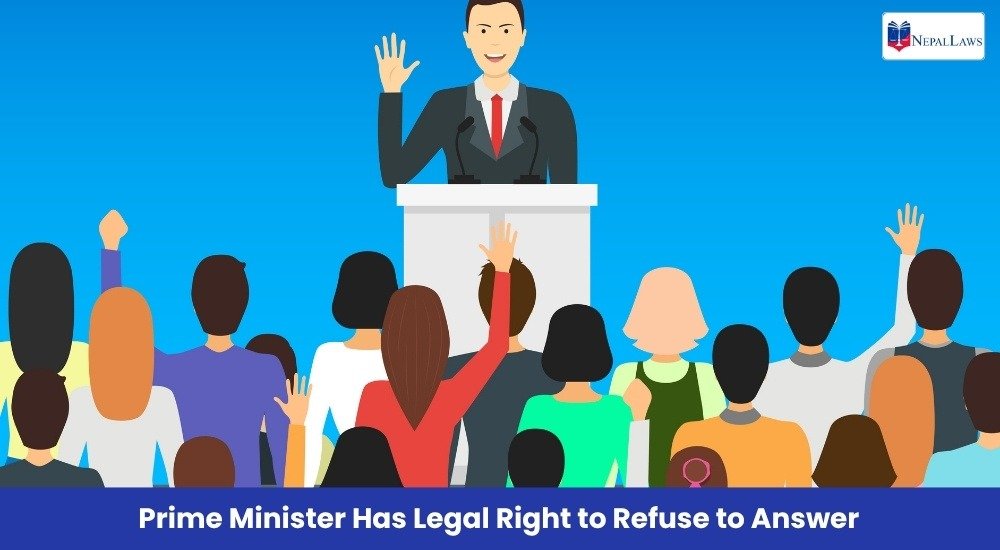
Although the Prime Minister is generally required to answer questions at once, the law allows an exception to protect national interests. Under Rule 54, the Prime Minister may refuse to answer if doing so would harm the national or public interest. Rule 49(1)(b) also prevents members from asking for confidential decisions of the Council of Ministers if making such information public would damage the national interest. If the Prime Minister uses this exception, the process for that question ends there.
Transparency and Post-Answer Limitations
The law supports public access to this form of accountability. Rule 57 allows the government and media to broadcast these question-and-answer sessions live.
However, after the Prime Minister gives an answer, lawmakers may not follow up. Rule 60 strictly forbids any discussion or debate on the Prime Minister’s answers during the session. This prevents the question hour from turning into a lengthy debate.
Conclusion
The legal process for questioning Nepal’s Prime Minister under the House of Representatives Rules 2079 balances the right to demand accountability with the need for order in Parliament. By requiring immediate answers from the Prime Minister, the rules ensure responsibility. At the same time, by limiting the number of questions per session, requiring advance notice, protecting sensitive information, and banning further debate, the law keeps parliamentary proceedings focused and orderly.

Ashaswi
Ashaswi Karki is an undergraduate law student passionate about making legal concepts accessible and engaging. Drawing on her academic journey and real-world experience with Nepal's legal system, she brings clarity and practical insights to her writing, helping readers better understand Nepali law.
View all postsGet the latest on laws and elections in your inbox.