
Nepal currently has more than one central government fund that can be connected with disaster relief. Two older funds operate through the Office of the Prime Minister and Council of Ministers, while the Disaster Risk Reduction and Management Act, 2074 establishes a separate statutory Disaster Management Fund. The similarity in the names of these funds, their overlapping purposes and the fact that they operate under different laws have created significant confusion for donors, the media and even government administration.
This issue became particularly visible following the Bhotekoshi flood, when public appeals referred to both the Prime Minister Natural Disaster Assistance Fund and the Prime Minister Assistance Fund.
Why Is Nepal’s Disaster Relief Fund System Confusing?
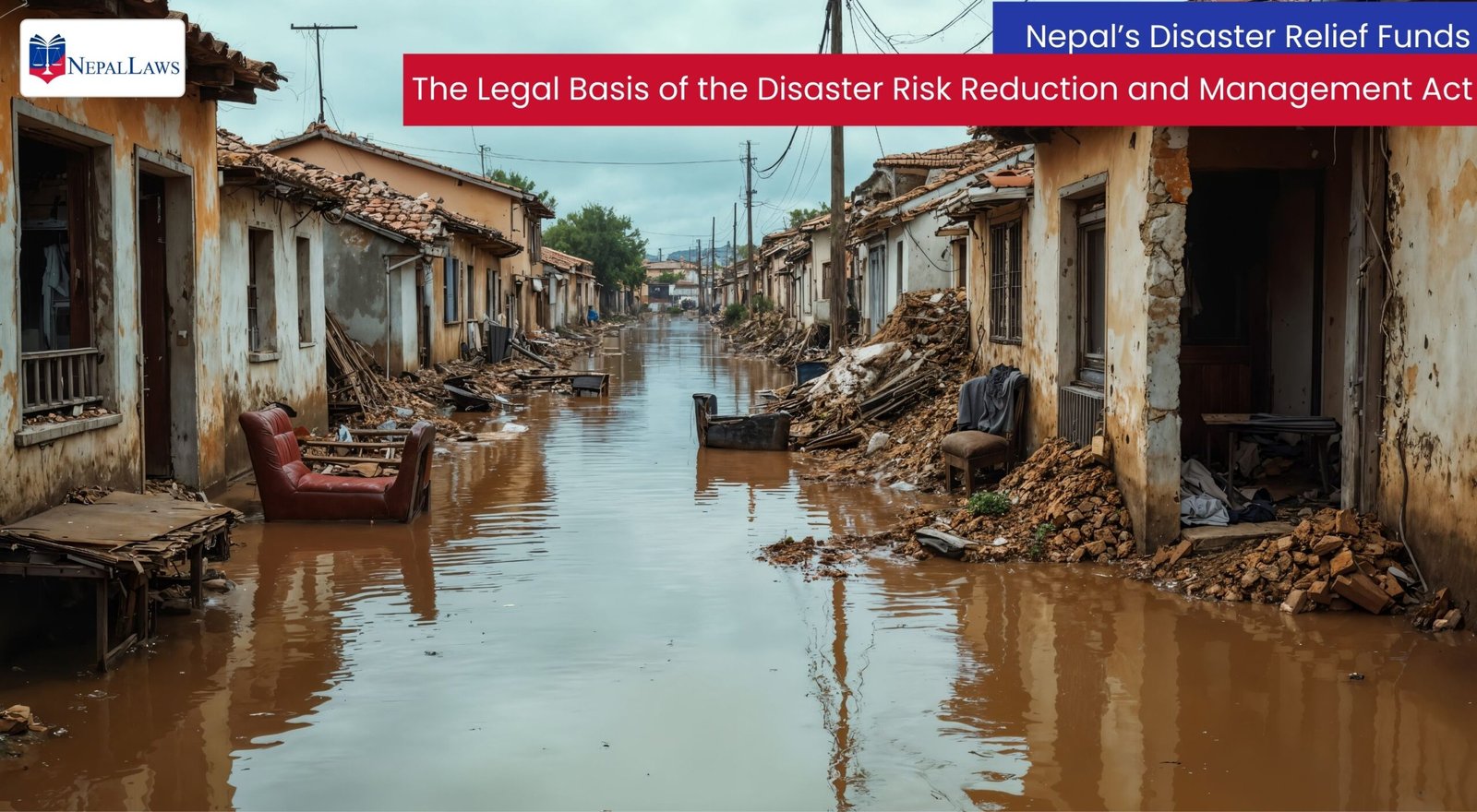
On the morning of 10 Bhadra 2083 (26 August 2026), a catastrophic flood on the Bhotekoshi River in Rasuwa caused heavy loss of life and property, affecting riverside areas of Rasuwa, Nuwakot, Dhading and Gorkha. The Government appealed for contributions, naming two funds: the Prime Minister Disaster Relief Fund and the Prime Minister’s Relief Fund. Municipal notices and government websites carried both names side by side.
The result was predictable. A citizen wanting to help had no way of knowing which account was the right one, or whether it made any difference. Major news outlets did no better: several reported the same accumulated figure, in the region of 5.04 billion rupees, and attributed it to each fund in turn. A reader following the coverage could not tell whether the two names referred to one account or two, and therefore could not tell whether the country had raised five billion rupees or ten billion.
That confusion is not a failure of attention on the part of donors or journalists. It is a direct consequence of the legal architecture, which now runs three funds in parallel where it should run one.
What The Law Actually Creates: The Disaster Management Fund?
In 2074 (2017), Parliament enacted the Disaster Risk Reduction and Management Act, 2074. It is a genuinely modern statute. It builds a chain of institutions running from a National Council for Disaster Risk Reduction and Management chaired by the Prime Minister under section 3, through an Executive Committee chaired by the Home Minister under section 6 and the National Disaster Risk Reduction and Management Authority under section 10, down to provincial committees under section 14, district committees under section 16 and local committees at ward level under section 17.
Section 22 of that Act establishes a single central fund, called the Disaster Management Fund, and the Act refers to it throughout simply as “the Fund” under the definition in section 2(c). Section 22(2) sets out what may be credited to it. The list is deliberately wide: amounts provided by the Government of Nepal; amounts donated or gifted by any organisation or individual; amounts provided as assistance, grants, or loans by a foreign government, individual, or international organisation; and amounts received from any other source. Where money comes from a foreign government or an international organisation, section 22(3) requires the concurrence of the Ministry of Finance.
The Act then imposes real controls. Under section 22(5), the Fund may be used only to meet the expenses of disaster management activities and relief operations, and section 22(6) prohibits its use for regular administrative functions. Section 22(7) provides that the Auditor-General shall audit the accounts of the Fund. Section 22(8) requires the Authority to prepare an annual report giving a true and full account of the Fund’s income and expenditure each year. Section 23, added by the First Amendment in 2075 (2019), requires a disaster management fund at every province, district and local level, with provincial funds channelling money to district funds.
Two further provisions matter. Section 39(2)(f) requires that the Government’s minimum standards for relief distribution include distribution through a one-window system, and section 39(3) makes those standards binding on every agency, individual and organisation engaged in relief distribution. And section 49(1) repealed the Natural Calamities (Relief) Act, 2039 (1982) outright, while section 49(2) preserved only acts already done under it.
The critical point is that the 2074 Act does not mention the Prime Minister’s older funds at all. It does not abolish them, regulate them, or bring them within its audit and reporting regime. It simply does not recognise them. They carry on independently, under their own older regulations, alongside the statutory system.

The Two Prime Ministerial Funds Are Not Variations On A Theme
It is tempting to assume that the two prime ministerial funds are much the same thing under slightly different names. They are not. They rest on different enabling powers, are controlled by different people, and serve different purposes. Setting them out side by side is the fastest way to dispel the confusion.
| Prime Minister’s Assistance Fund (Rahat Kosh) | Prime Minister Disaster Relief Fund (Daivi Prakop Uddhar Kosh) | |
|---|---|---|
| Governing instrument | Prime Minister’s Assistance Fund Regulation, 2059, published in the Nepal Gazette on 30 Baisakh 2059 | Prime Minister Disaster Relief Fund Operation Regulations, 2063 |
| Enabling power | Section 2 of the Administrative Procedures (Regularisation) Act, 2013 – a general executive rule-making power, not disaster legislation | Understood to rest on the Natural Calamities (Relief) Act, 2039, repealed in 2074 |
| Who decides spending | The Prime Minister, exercising personal discretion (taikabbi) | An administrative committee chaired by the Vice-Chairman of the National Planning Commission |
| Committee membership | Not applicable | Secretary of the Prime Minister’s Office as Member Secretary, with secretaries of Home, Health, Water Resources, Agriculture, Physical Planning and Local Development as members |
| Permitted purposes | Medical treatment, grants to social organisations, and assistance to individuals in weak economic circumstances | Nine specified heads of disaster expenditure, including rescue, temporary camps, food, clothing, medicine, transportation costs and rebuilding homes |
| Express prohibitions | Operated as a revolving fund; no comparable itemised prohibition | No salaries, allowances, travel, awards, gifts, or assistance unrelated to a disaster |
| Banking and signature | Not specified in comparable detail | Accounts at Nepal Rastra Bank or commercial banks; withdrawals require joint signature of the PMO Secretary and the Chief Accounting Officer |
The Prime Minister’s Assistance Fund, 2059
The older of the two is governed by the Prime Minister’s Assistance Fund Regulations, 2059, published in the Nepal Gazette on 30 Baisakh 2059 and amended in 2061. Its enabling power is section 2 of the Administrative Procedures (Regularisation) Act, 2013 — a general power that allows the Government to make rules for administrative arrangements. It is not disaster legislation, and the fund is not a disaster fund. The Regulations provide that the fund may receive money from the Government of Nepal and other sources and operate as a revolving fund.
Its purposes are medical treatment, grants to social organisations, and assistance to individuals in weak economic circumstances. Spending rests on the personal discretion of the Prime Minister, described in Nepali as tajabiji. That feature has attracted sustained criticism over the years. Because the Prime Minister decides alone, the fund has been characterised as a mechanism for distributing public money to political allies and party cadres under the description of medical or financial assistance. When a disaster appeal directs donations towards this fund, it is directing them towards an account whose ordinary purposes have nothing to do with disaster relief and whose spending is not committee-controlled.
The Prime Minister Disaster Relief Fund, 2063
The Prime Minister Disaster Relief Fund is a materially better-governed instrument, and it is worth saying so clearly. The Prime Minister Disaster Relief Fund Operation Regulations, 2063, govern it. The Prime Minister cannot spend from it at will. Decisions are taken by an administrative committee chaired by the Vice-Chairman of the National Planning Commission, with the Secretary of the Prime Minister’s Office as Member Secretary and the secretaries of Home, Health, Water Resources, Agriculture, Physical Planning and Local Development as members.
The Regulations confine expenditure to nine specified heads, all of them disaster-related: rescue operations, temporary camps, food, clothing, medicines, cremation costs, and the rebuilding of homes. They expressly prohibit spending on salaries, allowances, travel expenses, awards, gifts, or any financial assistance unconnected to a disaster. Accounts are held at Nepal Rastra Bank or at commercial banks, and withdrawals require the joint signature of the Secretary of the Prime Minister’s Office and the Chief Accounting Officer.
So the problem with the 2063 fund is not that it is loosely run. The problem is where its authority comes from.
The Defect At The Centre Of The 2063 Regulations
The 2063 Regulations were built on top of the disaster machinery created by the Natural Calamities (Relief) Act, 2039. They refer to the Central Disaster Relief Committee and the District Disaster Relief Committees established under that Act, and their operational scheme assumes those committees exist.
They do not. When section 49(1) of the Disaster Risk Reduction and Management Act, 2074 repealed the 2039 Act, the committees constituted under the 2039 Act were repealed with it. The 2063 Regulations therefore continue to refer, in their operative provisions, to bodies that have not existed since 2074. Section 49(2) of the 2074 Act saves functions already discharged under the repealed statute; on its face it does not purport to keep the old committees alive, nor to preserve subordinate rules as a continuing source of authority.
In practice, the gap is bridged administratively. Money from the 2063 fund is routed to victims through the newer institutions — the Authority, and the district and local disaster management committees under sections 16 and 17 of the 2074 Act — rather than through the abolished relief committees the Regulations actually name. The system works, but it works by departing from the text of the instrument that authorises it. Billions of rupees in public donations are being administered under regulations whose institutional scaffolding was removed nearly a decade ago.
It should be said that this is a defect in the legal foundation, not an accusation about the handling of the money. But a fund of this size ought not to depend for its validity on everyone agreeing not to look too closely at the enabling instrument.
The criticisms: duplication, underuse and discretion
The Prime Minister Disaster Relief Fund, 2063
Nepal maintains at least three central relief accounts that overlap in their work, alongside the provincial, district, and local funds required by section 23. Each has its own regulations, its own decision-making body, its own bank accounts and its own signatories. The consequence is that money must be collected in one place, resolved by a committee in a second, credited to a statutory fund in a third and then requested downwards through a fourth, at a moment when the response is time-critical. Every additional handover is a point at which relief can stall.
The statutory fund is left underused.
The complaint is not that the Disaster Management Fund lacks powers. Section 22(2) already permits it to receive donations from any organisation or individual, as well as contributions from foreign governments and international organisations. There is nothing in the 2074 Act requiring public donations to be routed through the Prime Minister’s office at all. The complaint is that the fund Parliament designed as the central financial instrument for disaster management is bypassed in practice and instead topped up with discretionary transfers. The better-regulated vehicle ends up carrying the smaller balance.
Discretion and the risk of patronage
The discretion problem is most acute with respect to the 2059 fund, where the Prime Minister decides alone. It is milder but still present in relation to the 2063 fund, where release depends on a committee decision rather than on any statutory allocation formula tied to assessed need. Critics contend that discretion of this kind leaves the timing, size and destination of disbursements open to political influence, and that it is difficult for the public to test whether that has happened when what is published is the running total received rather than a breakdown of what has been disbursed and on what basis. This is an argument about structural risk. It is a criticism of a mechanism that permits discretionary allocation, not an allegation that any particular disbursement has been improper.
What those inside the system say
The case for consolidation is not only made by outside critics. A former Chief Secretary has confirmed that, during his tenure, there was an active effort to merge the Prime Minister Disaster Relief Fund into the statutory Disaster Management Fund, specifically to prevent the two systems from running in parallel, and that institutional resistance blocked the change. A former Finance Secretary has said that he did not understand the purpose of maintaining parallel systems, and suggested there may be technical complexities he was not in a position to speak to.
Ministry officials, for their part, defend keeping the Prime Minister’s name attached to the funds on a straightforwardly practical basis: an appeal issued under the Prime Minister’s banner raises significantly more money than an appeal for a fund named after a statute. That is a real consideration, and it deserves a serious answer rather than dismissal. But it is an argument about branding, and branding does not require a separate legal entity. Nothing prevents the Government from appealing in the Prime Minister’s name for contributions paid directly into the Disaster Management Fund established under section 22.
The Minister for Law, Justice and Parliamentary Affairs, Sobita Gautam, has acknowledged the legal loopholes and stated that the Government is reviewing these laws with a view to fast-tracking reform, to consolidate the parallel structures into a single, transparent one-window system (ekdwar pranali) so that funds are properly managed and protected from misuse.
Worked example: the one billion rupee transfer
The Bhotekoshi response shows the machinery in operation. Donations were collected into the Prime Minister Disaster Relief Fund across accounts at nine commercial banks, as well as into separate United States dollar accounts at two banks. The fund operation committee constituted under the 2063 Regulations then met and decided to make one billion rupees available to the Disaster Management Fund under section 22 of the 2074 Act, drawn from the fund’s account at the Singha Durbar branch of Everest Bank. Only once inside the statutory Fund could the money be routed through the district disaster management committees for rescue, relief, immediate infrastructure repair, and temporary housing, based on requests submitted by district committees and local bodies.
Every rupee therefore made two journeys instead of one. The donor gave to fund A; a committee sitting under 2006 regulations, chaired by an official whose own constituting instrument refers to abolished committees, decided to move part of it to fund B; only then did the statutory spending machinery engage. Had the appeal been made to the Section 22 Fund in the first place, the second journey would have been unnecessary, and the money would have been inside the Auditor General’s statutory audit perimeter from the moment it was received.
What this means in practice
For individual and diaspora donors
The two prime ministerial funds are not interchangeable, nor does the disaster legislation govern them. Before contributing, check the exact fund name against the account details published by the Office of the Prime Minister and Council of Ministers, retain the transfer confirmation, and note that published collection totals record receipts rather than expenditure. A donor who wants their money spent only on disaster relief should be aware that the 2059 Assistance Fund’s ordinary purposes are medical and social assistance, not disaster response.
For companies, institutions and organisations
Corporate and institutional donors handing over cheques at public ceremonies should establish which of the three funds is receiving the money, since that determines the audit trail, the permitted uses and the reporting available to them afterwards. Organisations distributing relief in their own name should also note section 39(3), which makes the Government’s minimum relief standards, including the one-window requirement, binding on all individuals and organisations engaged in relief distribution.
For local governments and district committees
A large collection total announced at the centre does not translate into available budget at district level. Access depends on money first being released into the Disaster Management Fund under section 22 and then requested through the district committee mechanism under section 16. Timely, well-documented requests matter more than the headline figure.
A caution on unauthorised collections
Section 24(2)(b) of the 2074 Act makes it an offence, punishable with a fine of up to one hundred thousand rupees or imprisonment of up to six months or both, for a person to collect donations, relief goods or assistance, whether with or without permission, and distribute them independently or use them for personal gain. Informal fundraising drives set up after a disaster, however well-intentioned, need to be conducted with that provision in mind.
What a genuine one-window reform would have to do
Consolidation is legally straightforward because section 22(2) of the 2074 Act already covers every category of money that the older funds receive. A workable reform would need to do five things.
First, expressly repeal or supersede the 2059 and 2063 Regulations, so that no residual authority is left in doubt and no instrument continues to refer to abolished committees. Second, direct all public appeals and donation accounts, including foreign currency accounts, into the section 22 Fund, while leaving the Government free to make those appeals under the Prime Minister’s name if that is what raises money. Third, require publication of expenditure alongside receipts, so that the Auditor-General’s audit under section 22(7) and the annual report under section 22(8) are matched by contemporaneous public disclosure of who received what. Fourth, set clear timelines and criteria for onward release to provincial, district and local funds under section 23, replacing a discretionary committee decision at the centre with a rule-based entitlement once need is assessed. Fifth, if a separate discretionary fund for medical and social assistance is thought necessary, put it on a proper statutory footing with its own published criteria, rather than leaving it to rules made under a general administrative power from 2013.
Until that is done, Nepal will keep running overlapping systems in parallel — one built by Parliament and two inherited from before it — with public money flowing into the older accounts and the statutory fund waiting to be topped up.
Frequently asked questions
Are the prime ministerial funds illegal?
No, and it would not be accurate to describe them that way. The points are narrower. Neither fund is the fund established by the Disaster Risk Reduction and Management Act, 2074. The 2063 Regulations continue to refer to committees abolished when that Act repealed the Natural Calamities (Relief) Act, 2039, raising a real question about their present basis. And the 2059 fund rests on a general administrative rule-making power rather than on disaster legislation.
Which of the two prime ministerial funds should I donate to for disaster relief?
Of the two, the Prime Minister Disaster Relief Fund, governed by the 2063 Regulations, is the one designed for disaster expenditure, with nine specified heads of spending, express prohibitions on administrative use, committee decision-making, and joint-signature banking controls. The 2059 Assistance Fund exists for medical treatment, grants to social organisations and assistance to individuals in economic difficulty, and is spent at the Prime Minister’s personal discretion.
Why do the media report the same figure for both funds?
Because the two names are used almost interchangeably in official appeals and reporting, a single collection total is frequently attributed to whichever name the outlet uses. This is a reporting consequence of the underlying legal confusion rather than evidence that the money has been double-counted.
Is my donation audited?
The statutory audit duty under section 22(7) attaches to the Disaster Management Fund. Money held in a prime ministerial account falls within that specific statutory audit perimeter once it is transferred into the Disaster Management Fund. Other oversight mechanisms may apply to the prime ministerial accounts separately.
Can I donate directly to the Disaster Management Fund?
Section 22(2)(b) plainly permits the Fund to receive donations from any organisation or individual. Whether a public-facing account is currently operated for that purpose is a practical question, and prospective donors should confirm the position with the National Disaster Risk Reduction and Management Authority or the Ministry of Home Affairs.
Is reform actually coming?
The Minister for Law, Justice and Parliamentary Affairs has publicly acknowledged the loopholes and committed to fast-tracking a review aimed at a one-window system. A previous attempt at merger, pursued at Chief Secretary level, was blocked by institutional resistance. Readers should treat consolidation as an announced intention rather than an enacted change until amending legislation is published in the Nepal Gazette.