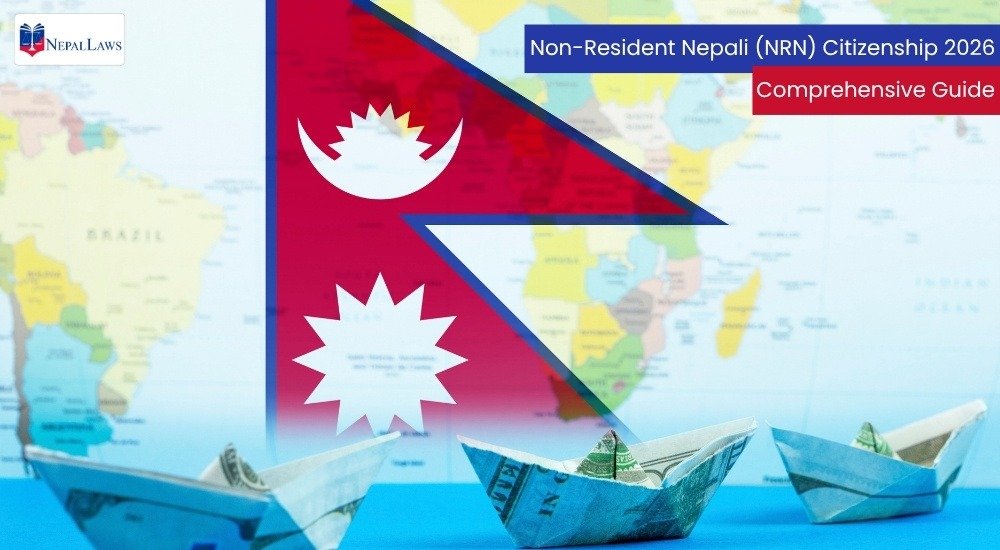

The term Non-Resident Nepali (NRN) refers to Nepali citizens or individuals of Nepali origin who live outside Nepal but retain strong ties with the country, whether through cultural, social, familial, or financial connections. This term encompasses a diverse group of people who have either migrated for work, education, or personal reasons or who are descendants of Nepali citizens living abroad. The NRN community plays a crucial role in Nepal’s socio-economic development, acting as a bridge between Nepal and the global diaspora.
The purpose of this guide is to clearly explain the legal framework, eligibility, and process for acquiring Non-Resident Nepali (NRN) Citizenship in 2026, helping readers understand their options and feel confident to pursue it if eligible.
Who are NRNs?
The Government of Nepal, through the third amendment to the Nepal Citizenship Act, 2063, introduced Non-Resident Nepali (NRN) Citizenship, a special status that connects foreign citizenship with Nepalese heritage. NRN citizenship allows Nepalis living abroad to enjoy economic, social, and cultural rights in Nepal, though it does not grant political rights like voting or holding public office. Any person who has acquired foreign citizenship (outside SAARC countries) after previously being a Nepali citizen by birth or descent, through parents or grandparents, is eligible for NRN citizenship.
As outlined in the Non-Resident Nepali Act, 2008, an NRN is defined as:
- Foreign Citizens of Nepali Origin – Individuals who were previously Nepali Citizens themselves, or whose parents or grandparents were Nepali citizens. Must hold foreign citizenship outside the SAARC region.
- Nepali Citizens Residing Abroad – Nepali citizens who have been living outside Nepal, excluding SAARC countries, for at least two years for employment or business purposes.
What Is the Legal Framework for NRN Citizenship?
NRN Citizenship is a special status for individuals of Nepali origin who hold foreign citizenship. It grants certain economic, social, and cultural rights within Nepal, but it excludes political and administrative rights. The legal framework governing NRN Citizenship includes the following key instruments:
Article 14 of the Constitution of Nepal 2072 specifies the eligibility criteria for non-residential citizenship, but does not explicitly state whether applicants must renounce their foreign citizenship. Clarifying this helps readers understand if they can hold dual citizenship or need to relinquish their previous nationality, ensuring they assess their options accurately.
The Constitution of Nepal 2072
Nepal Citizenship Act 2063
Section 7A of the Nepal Citizenship Act 2063 has a provision relating to Non-Resident Nepali (NRN) in Nepal. This Section states that Non-resident Nepali (NRN) citizenship can be acquired by a person who holds foreign citizenship, lives outside South Asian regional countries, and was previously a Nepali citizen by birth or descent. It allows them to enjoy economic, social, and cultural rights in Nepal. Applicants must submit proof of past Nepali citizenship, foreign citizenship, residence, and a commitment to follow Nepal’s laws. The authorities verify the documents and grant citizenship, after which an oath follows. Citizenship may be cancelled if obtained through false information or if the person acts against Nepal’s national interests.
Who Is Eligible for NRN Citizenship?
To qualify for NRN Citizenship, an individual must meet specific eligibility criteria defined by the Government of Nepal. Firstly, a person who was previously a Nepali citizen and has settled abroad can retain a formal connection with their homeland and enjoy certain rights in Nepal, including economic, social, and cultural privileges.
Secondly, NRN Citizenship is also available to foreign citizens whose father, mother, grandfather, or grandmother was previously a Nepali citizen by birth or descent. This provision recognises the heritage of individuals born abroad but with Nepali ancestry, allowing them to maintain a legal and cultural link with Nepal even if they themselves never held Nepali citizenship directly.
However, there are clear restrictions on eligibility. Individuals residing in countries that are members of the South Asian Association for Regional Cooperation (SAARC) are not eligible to obtain NRN Citizenship. This limitation is designed to encourage the program for Nepali living outside the immediate South Asian region, reflecting the policy’s focus on those who have permanently settled farther abroad.
What Documents Are Required to Apply for NRN Citizenship?
In the Nepal Citizenship Act 2063, Section 7A(2), and the Nepal Citizenship Rule 2063, Rule 8A, there are provisions governing the documentation required for NRN citizenship. In accordance with these provisions, applicants must present the following documents when applying for NRN Citizenship, either at the District Administration Office (DAO) pr a Nepali embassy/consulate:
- Completed application form available at the DAO.
- Citizenship Renunciation Letter (if applicable).
- Copies of the foreign passport and foreign citizenship certificate.
- Copies of the applicant’s previous Nepali citizenship and Nepali passport
- Copies of the Nepali citizenship of the applicant’s parents.
- NRN Card (if already held).
- Recent passport-sized photographs.
How Is the NRN Citizenship Application Process Carried Out?
There are two main ways to apply for NRN Citizenship, directly in Nepal or through a Nepali Embassy or Consulate abroad.
Direct Method
The direct method is carried out through the District Administration Office (DAO) in Nepal and is a faster, more reliable process. Here is the step-wise procedure for NRN Citizenship:
Application Submission
Submit the completed application at the DAO in the district where the previous Nepali Citizenship was issued.
Police Verification
The DAO requests a background check from the concerned police office.
Renunciation Finalisation
If the application has not yet been completed, the formal renunciation process requires them to obtain the Citizenship Renunciation Letter from the DAO.
Local Recommendation
Applicants must submit an application to the Local Ward Office for a formal Recommendation Letter for NRN Citizenship.
Physical Verification
The applicant must appear in person at the DAO with a Nepali relative who will verify the applicant’s identity and sign necessary documents.
Issuance of NRN Citizenship
After successful verification and completion of all requirements, NRN Citizenship is granted.
Embassy/Consulate Application
In this process, submit the application to the Nepali diplomatic mission in their country of residence. The embassy or consulate forwards the application to Nepal’s Ministry of Foreign Affairs, which then transmits it to the relevant DAO for verification and issuance of the certificate. However, despite this legal option, most embassies and consulates currently advise applicants to apply directly at the DAO in Nepal for faster processing.
Estimated Timeline for NRN Citizenship Application
For applicants who apply directly at the District Administration Office (DAO) in Nepal, the entire process from submission to issuance of the Non-Resident Nepali (NRN) Citizenship Certificate generally takes approximately 10 to 12 working days, assuming all required documents are properly prepared and submitted. This timeline includes the initial verification of submitted documents, identity confirmation through close relatives or other Nepalese citizens, and the completion of the oath-taking procedure.
In practice, the timeline may vary slightly depending on the DAO’s workload, the completeness and authenticity of the documentation, and any additional verification requested by the Chief District Officer (CDO) or local authorities. Applicants are advised to ensure that all documents, such as proof of prior renunciation of Nepali citizenship, foreign citizenship, and evidence of ancestral Nepali origin, are in order before submission to avoid delays. Following successful verification and completion of the formalities, the DAO issues the NRN Citizenship Certificate, officially granting the applicant their non-resident status.
What Original Documents Must be Brought to the DAO and Ward Office?
Applicants should carry the following original documents while visiting the District Administration Office and the Ward Office for the NRN Citizenship process:
- Citizenship Certification
- Passport
- Citizenship Renunciation Letter
- NRN Card (if available)
- Citizenship Certificate of the Nepali relative who will appear at the DAO for identity verification and signature
These original documents may be required for verification, identification, and supporting the application process.
What Are the Grounds for the Cancellation of NRN Citizenship?
NRN Citizenship is not unconditional and may be cancelled if certain serious legal grounds are established. The law allows cancellation in cases where citizenship has been obtained improperly or where the holder has acted against Nepal’s fundamental interests. The following are the main grounds for the cancellation of NRN Citizenship:
Submission of False Information
One of the primary grounds for cancellation is obtaining NRN Citizenship through the submission of false, misleading, or fraudulent information during the application process. This may include providing incorrect personal details, false documents, or inaccurate information about family lineage or citizenship. If it is later discovered that the citizenship certificate was granted on the basis of such false information, the concerned authority may cancel it.
What Are the Key Differences Between NRN and Nepali Citizenship?
Understanding the distinction between NRN status and full Nepali citizenship is important for anyone considering NRN status or comparing the rights associated with each legal status. Although both are connected to Nepal, they differ in legal rights, constitutional recognition, and access to state benefits. Nepali citizenship confers full membership in the state, including political rights and comprehensive legal protection. By contrast, NRN status is a special legal arrangement for eligible persons of Nepali origin who hold foreign citizenship, allowing them to maintain economic, social, and cultural ties with Nepal without granting full citizenship rights.
The table below highlights the main differences:
| Aspect | Nepali Citizenship | NRN Status |
|---|---|---|
| Nature of Status | Full membership in the state of Nepal. | Special legal arrangement for persons of Nepali origin holding foreign citizenship. |
| Political Rights | Includes full political rights such as voting and holding public office. | No political rights granted. |
| Legal Protection | Comprehensive legal protection under the Constitution of Nepal. | Limited legal recognition under a separate legal arrangement, not full constitutional protection. |
| Constitutional Recognition | Fully recognized as a citizen under the Constitution. | Not recognized as a citizen; recognized only as a person of Nepali origin. |
| Access to State Benefits | Full access to state benefits and services available to citizens. | Limited access, primarily economic, social, and cultural benefits. |
| Foreign Citizenship | Not applicable; Nepali citizens generally cannot hold dual citizenship. | Allows individuals to retain their foreign citizenship while maintaining ties with Nepal. |
| Purpose | Establishes full legal membership and identity as a Nepali national. | Maintains economic, social, and cultural connection to Nepal without full citizenship rights. |
Conclusion
Non-Resident Nepali (NRN) Citizenship is a legal mechanism that allows eligible individuals of Nepali origin who have acquired foreign citizenship outside the SAARC region to maintain a formal legal connection with Nepal. It grants economic, social, and cultural rights in Nepal while excluding political and administrative rights. The framework for NRN Citizenship is primarily based on the Constitution of Nepal, the Nepal Citizenship Act, 2063, the Nepal Citizenship Rules, 2063, and related legal provisions governing non-resident Nepalis.
For eligible applicants, NRN Citizenship provides a structured way to preserve ties with Nepal while living abroad. However, the process requires careful attention to eligibility conditions, supporting documents, renunciation records where applicable, and verification procedures at the District Administration Office or through Nepali diplomatic missions. Because the procedure involves legal and administrative steps, applicants should ensure that all submitted information is accurate, complete, and supported by original documents to avoid unnecessary delays or rejection.
FAQs
NRN Citizenship is a special type of citizenship granted to eligible persons of Nepali origin who have acquired foreign citizenship outside the SAARC region. It allows them to enjoy economic, social, and cultural rights in Nepal, but not political or administrative rights.
No, NRN Citizenship is not the same as full dual citizenship. It does not confer the same political rights as Nepali citizenship, such as the right to vote, to hold constitutional office, or to participate in political administration.
A person may apply if they were previously a Nepali citizen and acquired foreign citizenship, or if their father, mother, grandfather, or grandmother was previously a Nepali citizen by birth or descent, provided they are not residing in a SAARC country.
No, individuals residing in SAARC member countries are not eligible for NRN Citizenship under the current legal framework.
NRN Citizenship provides economic, social, and cultural rights in Nepal. These may include rights related to property, business, investment, and social connections, subject to Nepali law. It does not provide political or administrative rights.
Yes, there is a legal provision to apply through a Nepali embassy or consulate abroad. However, in practice, many applicants are advised to apply directly to the District Administration Office in Nepal for faster, more reliable processing.
The application should generally be submitted to the District Administration Office of the district where the applicant’s previous Nepali citizenship was issued.
If the application is submitted directly to the DAO with complete and accurate documents, the process generally takes around 10 to 12 working days. However, this may vary depending on the office’s workload and any additional verification requirements.
Yes, NRN Citizenship can be cancelled if it was obtained by submitting false information or if the holder is convicted of acts against the independence, sovereignty, territorial integrity, or national interest of Nepal.
NRN Citizenship provides a legal basis for eligible members of the Nepali diaspora to maintain formal ties with Nepal while residing abroad. It helps preserve social, cultural, and economic connections with the country.