

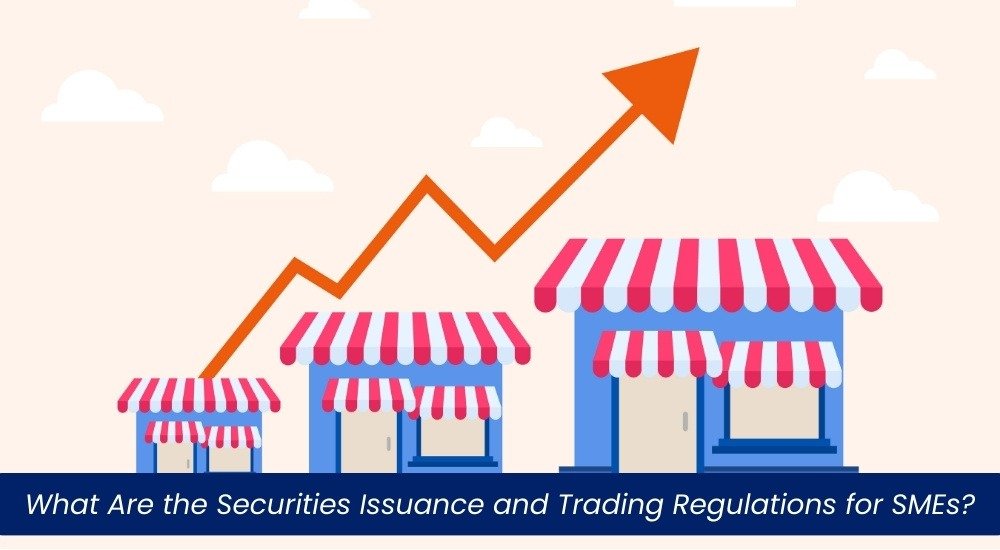
Small and medium-sized enterprises (SMEs) are vital to the economy, driving innovation, job creation, and contributing significantly to national growth. Recognising their importance can foster appreciation and motivation among stakeholders. However, many SMEs struggle to access the necessary capital for growth and expansion. The Securities Issuance and Trading Regulations for SMEs, 2081, represent a significant leap forward in addressing this challenge. These regulations create a dedicated, streamlined framework for SMEs to raise capital through public securities markets, offering a lifeline to many businesses.
Business owners, investors, and advisors must understand the provisions and implications of the Securities Issuance and Trading Regulations for SMEs. Recognising their role in this framework can inspire stakeholders to participate actively in fostering economic growth and innovation, ensuring they are well prepared to leverage new opportunities.
What Are the Securities Issuance and Trading Regulations for SMEs?
The Securities Issuance and Trading Regulations for SMEs 2081 provide a tailored legal framework governing the issuance and trading of securities by small and medium-sized enterprises on designated platforms.
Recognising that traditional securities regulations are often too burdensome for smaller businesses, these regulations offer a more flexible and affordable approach.
This framework is designed to reduce compliance costs and administrative requirements, while still ensuring that essential investor protections remain in place. The regulations address a variety of key aspects, including:
- Eligibility criteria for SMEs
- Disclosure requirements
- The issuance process
- Trading mechanisms
- Ongoing compliance obligations
This dedicated approach helps SMEs raise capital efficiently while adhering to important legal standards that protect investors and ensure market stability.
Why SME-Specific Securities Regulations Matter?
Small and medium-sized enterprises (SMEs) play a critical role in driving economic growth and innovation. However, they often face unique challenges in the financial landscape that differ from those of larger corporations. This is where SME-specific securities regulations come into play.
One of the most significant barriers to SME growth is access to capital. Traditional funding sources, such as bank loans or venture capital, are often out of reach for smaller businesses.
Banks view SMEs as higher-risk borrowers, while venture capitalists typically focus on high-growth, tech-driven companies and require substantial equity stakes in exchange for investment.
The Securities Issuance and Trading Regulations for SMEs play a crucial role in bridging SMEs’ funding gap.
By providing a new avenue for capital raising, these regulations empower SMEs, opening up previously out-of-reach opportunities and instilling confidence in their growth potential.
SMEs can now access public markets, offering shares or debt securities to a broad range of investors.
This new funding source allows SMEs to expand their operations, invest in innovation, hire additional staff, and pursue new growth opportunities.
Traditional securities regulations can impose heavy compliance costs on smaller companies. By contrast, the SME-specific framework provides much-needed relief by simplifying disclosure requirements and streamlining approval processes.
This makes it more financially feasible for smaller companies to tap public capital markets without incurring prohibitive costs.
These regulations also contribute to the broader development of Nepal’s capital markets, reinforcing your confidence in the market’s growth and stability.
By establishing clear pathways for SMEs to access public markets, the regulations increase market depth and investor participation, offering new investment opportunities for both retail and institutional investors.
This, in turn, helps to build a more robust and diversified financial market in Nepal, giving stakeholders a sense of achievement and confidence in the market’s resilience.
Eligibility Criteria for SMEs
The Securities Issuance and Trading Regulations for SMEs, 2081, set out specific eligibility criteria for companies wishing to raise capital through securities issuance.
Size Thresholds
To qualify as an SME under the regulations, businesses typically need to meet certain quantitative thresholds based on:
- Annual revenue
- Total assets
- Number of employees
These thresholds ensure that the simplified framework applies only to businesses that genuinely need streamlined access to capital markets, and not to larger corporations seeking to bypass standard regulations.
For example, eligibility may be limited to companies with annual revenue below a specific amount or those employing fewer than a certain number of people.
These criteria ensure that only truly small and medium-sized enterprises can benefit from the regulations.
Operational Requirements
SMEs must also demonstrate operational stability to qualify for securities issuance. This often includes showing:
- A proven track record of business operations for a minimum period
- Positive financial performance
- Recent audited financial statements
These requirements protect investors by ensuring that only businesses with a demonstrated history of stability and viability can access public markets, providing a sense of security in their investment decisions.
Legal and Compliance Standing
SMEs seeking to issue securities must be in good standing with regulatory authorities. This includes maintaining proper corporate governance structures, complying with tax and company law requirements, and having no history of serious regulatory violations.
This ensures that the issuer is trustworthy and reliable before offering securities to the public.
The Securities Issuance Process
The process for SMEs to issue securities involves several important steps:
Preparing for Issuance
Before entering the market, SMEs must ensure that they are thoroughly prepared. This includes ensuring that financial records are in order, engaging qualified auditors, and developing a solid business plan to demonstrate how the raised capital will be utilised.
Additionally, SMEs must decide which type of securities to issue, ordinary shares, preference shares, or debt securities, as each has different implications for control, returns, and investor risk.
Documentation and Disclosure
SMEs must still provide sufficient information to investors to enable informed decision-making, albeit with simplified disclosure requirements compared to larger companies.
Required documentation typically includes:
- A prospectus outlining the business, its operations, financial position, and risks.
- Recent audited financial statements
- Information about the company’s management, key personnel, and their qualifications.
- Details of how the proceeds from the securities issuance will be used.
While the level of detail may be adjusted to reflect the size and complexity of the business, emphasising transparency helps build trust and confidence in the process.
Regulatory Approval
After preparing the necessary documentation, SMEs must submit their applications to the relevant regulatory authorities for review and approval, ensuring a fair and credible process.
The regulator will assess whether the company meets eligibility requirements, whether the disclosure is adequate, and whether investor protection concerns are sufficiently addressed.
The approval process for SMEs is generally faster and simpler than for larger offerings, but companies should still plan for potential delays.
Pricing and Allocation
SMEs must carefully determine the price at which they will offer their securities, ensuring a fair balance between raising sufficient capital and providing attractive value to investors.
The price can be set using various methods, such as fixed price offerings, book building, or auctions.
Once pricing is determined, securities are allocated to investors in accordance with the offering terms, ensuring a fair and transparent process.
Trading Mechanisms for SME Securities
Exploring the trading mechanisms specifically designed for securities issued by small and medium-sized enterprises (SMEs) reveals a complex yet crucial framework that facilitates investment and growth in this vital sector. These mechanisms include platforms such as [name specific platforms or systems], which enable the buying and selling of SME shares, thereby improving accessibility, liquidity, and market efficiency. Include details on how these platforms operate and their eligibility criteria to guide stakeholders effectively.
SME securities are generally traded on designated platforms or market segments specifically created for smaller companies.
These platforms may have different listing requirements, trading rules, and market structures compared to larger, more established markets.
While trading volumes on these platforms may be lower than for large companies, they provide important liquidity, allowing investors to buy and sell securities after the initial offering.
However, liquidity may be lower than for larger companies, so investors should be aware of potential challenges in trading.
To support liquidity, market makers may be required or encouraged to provide continuous bid and ask prices for SME securities.
These market makers help ensure that investors can trade securities when needed, enhancing liquidity and stabilising prices.
SME securities typically trade during regular market hours and use the same settlement systems as other listed securities.
The settlement process, which involves transferring securities from the seller to the buyer and paying the seller from the buyer, usually occurs within a specified time frame after a trade is executed.
Ongoing Compliance and Reporting Obligations
Once securities have been issued and are being traded, SMEs must continue to meet several ongoing compliance and reporting requirements.
Periodic Financial Reporting
SMEs must publish audited annual financial statements and provide interim reports to keep investors informed about the company’s performance.
These reports allow investors to monitor the company’s economic health over time.
Material Event Disclosure
SMEs must disclose any material events that could affect the value of their securities or influence investment decisions.
This might include significant changes in management, new business developments, or legal proceedings. Timely and accurate disclosures are essential to maintaining investor confidence.
Corporate Governance Standards
While SMEs are subject to less stringent governance requirements than larger companies, they must still maintain appropriate governance structures.
This includes having qualified directors, conducting regular board meetings, keeping proper records, and ensuring adequate internal controls.
Conclusion
The Securities Issuance and Trading Regulations for SMEs, 2081, represent a significant step forward in enhancing access to capital for small and medium-sized businesses in Nepal.
By creating a tailored, streamlined framework, these regulations provide SMEs with a pathway to raise public capital while maintaining essential safeguards for investors.
For SMEs considering securities issuance, understanding these regulations is crucial for navigating the opportunities and responsibilities they create.
For investors, these regulations open up new investment opportunities in smaller, innovative companies. With the right preparation, professional guidance, and commitment to compliance, SMEs can leverage this framework to fuel their growth and achieve long-term success.
Suppose you are an SME looking to raise capital through the securities market. In that case, it is vital to engage with experienced legal and financial advisers who can guide you through the regulatory requirements and help you make informed decisions.
For investors, reviewing SMEs’ disclosure documents and staying informed about market conditions will help you make well-informed investment decisions.