

Nepal’s stock market has reached a decisive turning point. Participation has expanded rapidly, especially among retail investors, yet the regulatory and technological foundations needed to support a fair and transparent stock market in Nepal have not kept pace. Clarifying specific reforms, such as enhanced surveillance systems and stricter enforcement measures, can help stakeholders understand concrete actions required to rebuild investor confidence and foster trust and stability.
Nepal’s securities regulator, SEBON, and the Nepal Stock Exchange (NEPSE) must not only supervise but also implement reforms that directly enhance fairness and transparency. Drawing on successful international approaches, such as real-time disclosure systems and market integrity frameworks, these reforms should be tailored to Nepal’s unique market environment to effectively strengthen stakeholder confidence and encourage active participation in building a more open Nepal stock market.
What Is the Current Condition of Nepal’s Stock Market?
Over the past few decades, Nepal’s securities market has transformed from a niche trading venue into a mainstream investment channel, attracting hundreds of thousands of participants. However, the disparity in investor knowledge and regulatory capacity underscores the shared responsibility to improve market infrastructure and investor protection. Implementing these reforms can help rebuild confidence and foster a more inclusive stock market nepal environment, emphasising the collective effort needed to safeguard investors.
Financial literacy levels vary greatly. A minority of investors analyse company fundamentals and understand market risks. Many others rely on rumours, social media chatter, or “tips” from unqualified sources. This uneven playing field makes it much easier for bad actors to exploit information gaps and manipulate prices, underscoring the need for reforms to improve information flow and protect investors.
In practice, consistent market success remains rare. Even informed investors often face losses, not just due to normal price volatility but also because of:
- delayed or inadequate disclosure
- price manipulation
- structurally weak protections
If experienced investors struggle, the situation for retail investors, who often lack analytical tools or training, is even more concerning. Implementing targeted reforms, such as mandatory disclosure standards, investor education programs, and accessible analytical tools, should be complemented by stakeholder engagement and capacity-building initiatives. These efforts will help retail investors understand reforms and benefit from a fairer, more inclusive market environment.
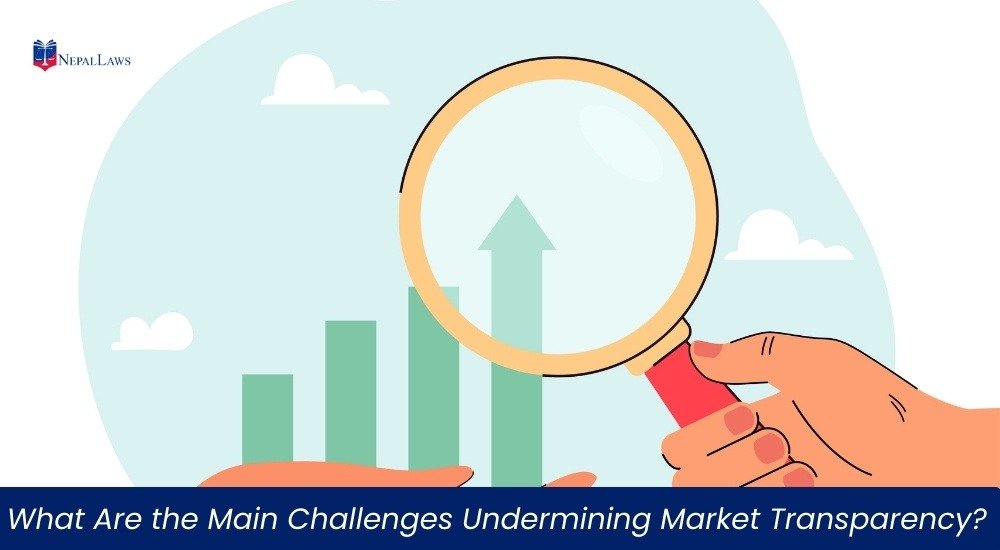
What Are the Main Challenges Undermining Market Transparency?
The main challenges undermining market transparency in Nepal include inconsistent disclosure practices, delayed reporting, and weak enforcement. Institutional and legal barriers, such as outdated regulations and limited authority for SEBON, hinder the adoption of advanced surveillance tools such as real-time monitoring systems, automated pattern recognition, and AI-driven analytics, which are essential for improving Nepal stock market oversight.
Some market participants use organised tactics to distort prices and mislead investors. They may coordinate trades, release carefully timed news, or create artificial demand to push prices up or down. These strategies exploit information asymmetry and can cause severe losses for genuine investors who take prices at face value.
Social media is now central to market conversation in Nepal. It provides a platform for discussion, education, and sharing analysis. However, it also functions as a powerful tool for:
- Spreading unfounded rumours
- Amplifying unverified claims
- Orchestrating sentiment wings
Anonymous accounts and closed groups make it easy for manipulators to influence prices without accountability. SEBON currently lacks the tools and structure needed to monitor and respond effectively to such digital activity.
There has been a surge in self-proclaimed “technical analysts” and “market experts” who offer predictions and stock picks without any formal training, licensing, or regulatory supervision. Many build large followings on social media, yet:
- They may have a limited understanding of risk.
- Their motives may be mixed, including personal gain.
- Poor or biased advice can lead followers to avoidable losses.
The absence of mandatory licensing or competency standards means there are no direct consequences for advisers who mislead investors.
Modern securities markets rely on real-time surveillance systems to detect manipulation, insider trading, and suspicious patterns. In Nepal, both SEBON and NEPSE still operate with comparatively basic tools. They often detect problems only after the damage is done, rather than as they are unfolding.
Without automated pattern recognition, real-time alerts, and advanced analytics, it becomes extremely difficult to detect complex manipulation schemes, especially those involving multiple accounts or coordinated activities across different securities.
Organised interest groups, formal or informal, actively coordinate buying and selling strategies to influence prices. By accumulating positions, timing orders, and using their networks to push narratives, they can create sharp price movements that bear little relation to underlying fundamentals.
Individual investors who are not part of these networks are left at a disadvantage, reinforcing the perception that the market is tilted in favour of insiders and organised groups.
What Role Could a Social Media Monitoring Task Force Play?
A dedicated social media monitoring task force under SEBON is now essential or protecting the Nepal stock market from misinformation and coordinated manipulation. It should track market-related content across major platforms, identify coordinated manipulation campaigns and false information, and use tools like automated filters and basic AI to flag suspicious patterns.
Beyond monitoring, the unit must have clear legal authority to issue warnings, demand corrections, impose sanctions in serious cases, and refer criminal matters to law enforcement. It should operate across major platforms, collaborate with law enforcement agencies, and use tools like automated filters and basic AI to flag suspicious patterns. The task force should also prioritise investor education, helping the public evaluate online content, verify sources, and recognise red flags in “viral” stock tips, ensuring effective oversight and public trust in Nepal’s stock market.
Why Is a Licensing Regime for Market Professionals Necessary?
Implementing a comprehensive licensing framework for individuals and entities offering securities-related advice would significantly enhance the quality and reliability of information in the financial landscape. This structured approach would ensure that advisors are well-trained and adhere to established standards, fostering greater trust and transparency for investors navigating complex market dynamics.
Who Should Licensing Involve?
At a minimum, the foundational elements that must be included are clearly defined objectives, comprehensive guidelines, and a structured timeline to ensure effective planning and execution. Each component should be thoroughly outlined to facilitate understanding and alignment among all participants involved in the process.
- Technical analysts offering chart-based analysis.
- Investment advisers providing portfolio or stock-specific advice.
- Research analysts publishing reports on companies or sectors.
What Should Licensing Involve?
For each category, the Securities Board of Nepal (SEBON) should establish clear definitions and guidelines that encompass the following aspects:
- Minimum educational requirements
- Professional training or supervised practice
- Formal examinations on both theory and ethics
Licences should be time-bound and renewed periodically, with continuing education requirements to keep skills up to date.
A transparent disciplinary system is equally important. Where licensed professionals mislead investors, breach conduct rules or engage in manipulation, SEBON should be able to investigate and, where appropriate, suspend or revoke their licences.
How Should Interest Groups and Coordination Trading Be Regulated?
SEBON needs explicit legal authority to regulate organised market groups whose coordinated activities can significantly affect prices.
Reforms should clearly define which groups must register based on size or assets, require them to disclose their structure, strategy, and holdings, and prohibit coordinated behaviour that manipulates prices or creates false market impressions.
The aim is not to ban collaboration entirely, as legitimate investment clubs and research communities should continue to operate, but to prevent the misuse of collective influence that harms ordinary investors.
Why Must NEPSE Upgrade Its Technology and Surveillance Capacity?
To ensure the success of any proposed reforms, it is essential to modernise NEPSE’s infrastructure significantly. Among the key priorities are:
- Robust trading systems that can oversee higher volumes and complex order types
- Built-in circuit breakers and voltage controls
- Real-time surveillance tools that flag unusual prices or volume movements
- Comprehensive audit trails that allow investigators to reconstruct trading patterns
NEPSE has already introduced measures such as using an average of the final 15 minutes for closing prices. But these steps are only a starting point. Greater transparency, improved stability, and richer data are essential for a fairer Nepal stock market.
All investors, retail and institutional, should have access to accurate and timely market information. Equal access to current prices, volume, and basic analytics helps level the playing field and reduces the advantage of those with privileged access to faster data.
How Can Investor Education Support Transparency and Protection?
Simply imposing regulations is insufficient if investors lack a comprehensive understanding of the market they are entering. Without a clear grasp of market dynamics, economic indicators, and potential risks, even the most robust regulations can fail to protect investors from pitfalls and misjudgments. Educating investors about the intricacies of the market is crucial to helping them navigate it confidently and make informed decisions.
SEBON and NEPSE should significantly enhance their educational initiatives by placing a strong emphasis on the following areas:
- Basic functioning of the securities market
- Reading and interpreting company reports
- Understanding risk and diversification
- Identifying fraud and common manipulation strategies
These programmes should be delivered through a mix of workshops, online courses, videos, and practical guides, and tailored to diverse levels of experience.
Special attention should be given to vulnerable groups such as new investors, rural populations, and women, who currently participate less and may face additional barriers.
How Can Nepal Benefit from Global and Regional Experience?
SEBON should take proactive steps to enhance its regulatory frameworks by:
- Studying Regulatory Models – Analyse the frameworks of more developed markets to identify best practices that can be adapted locally.
- Engaging with International Bodies – Participate in global regulatory organisations and training programs to gain insights and knowledge.
- Seeking Technical Assistance – Partner with established institutions to strengthen surveillance and enforcement capabilities.
- Fostering Regional Cooperation – Collaborate with neighbouring regulators to address cross-border challenges and harmonise standards as investors operate across multiple jurisdictions.
These initiatives will improve SEBON’s regulatory effectiveness and protect market integrity.
Conclusion
Nepal’s stock market holds immense potential but still faces major risks. Without decisive regulatory and structural reforms, transparency will remain weak, manipulation will persist, and investor confidence will continue to erode. SEBON and NEPSE sit at the core of the solution. By effectively monitoring social media, licensing, and regulating market professionals, managing interest groups, upgrading NEPSE’s technology, accelerating exchange restructuring, and strengthening disclosure and surveillance, they can transform Nepal’s capital market into a fairer, stronger, and more attractive destination for investors.
Nepal has moved beyond the stage where small, incremental tweaks can make a difference. What the country now needs is a coordinated and sustained reform agenda involving regulators, policymakers, market institutions, and investors themselves.
For SEBON and NEPSE, this means prioritising transparency and investor protection over short-term convenience. The government requires supporting legal and structural reforms that give regulators the authority, tools, and autonomy needed to enforce the rules effectively and safeguard the Nepal Stock Market for generations to come.