

Insider trading refers to the illegal practice of trading stocks, bonds, or other securities based on material, non-public information about a company. Nepal’s stock market has experienced rapid growth however, alongside this expansion, insider trading has emerged as a significant issue. Insider trading occurs when individuals use non-public information to make securities transactions, thereby gaining an unfair advantage.
This practice has affected public trust, particularly among middle-class investors, as the risks of market manipulation grow, especially with low float stocks.
What is Insider Trading in Nepal?
Insider trading in Nepal, as defined under the Securities Act, 2063, and the Securities Board Regulation. 2064 refers to the illegal practice of trading securities based on non-public information that could influence the price of those securities.
This can include trading in shares by company executives, directors, auditors, or even their families when they have access to confidential information about a company’s financial health, mergers, or other significant developments.
In simpler terms, insiders (people with access to confidential information) trade stocks based on what they know before the public does, taking advantage of price movements that will occur once the information becomes public.
Legal Framework for Insider Trading
In Nepal, insider trading is defined under the Securities Act 2063 (2006) and the Securities Board Regulation, 2064 (2008).
The law prohibits trading based on unpublished insider information. The Securities Act states that a person commits insider trading if they trade in securities or cause others to do so based on non-public information that is likely to influence the price of the securities.
This information typically pertains to company performance, mergers, financial reports, or other material events that have not been previously disclosed.
Notable Cases of Insider Trading in Nepal
Several Cases of insider trading have surfaced, highlighting the scope of the problem:
- Ridi Power Company Case - SEBON filed charges against the former chairperson of Ridi Hydropower for trading shares based on inside information, alleging an offence worth Rs 32.3 million. The penalty could include fines or imprisonment if proven.
- Nepal Hydro Developer Limited Scandal - Former executives of the company were fined for illegal trading of shares, violating insider trading laws.
- Sarbottam Cement IPO Controversy - Allegations arose when regulators themselves, NEPSE CEO, and SEBON Chair were found to have traded shares of Sarbottam Cement for their relatives at discounted rates just before the company's IPO.
- Corporate Development Bank and Karnali Development Bank Case - In both cases, insider trading caused stock prices to move unusually, prompting investigations into the involvement of individuals with inside information.
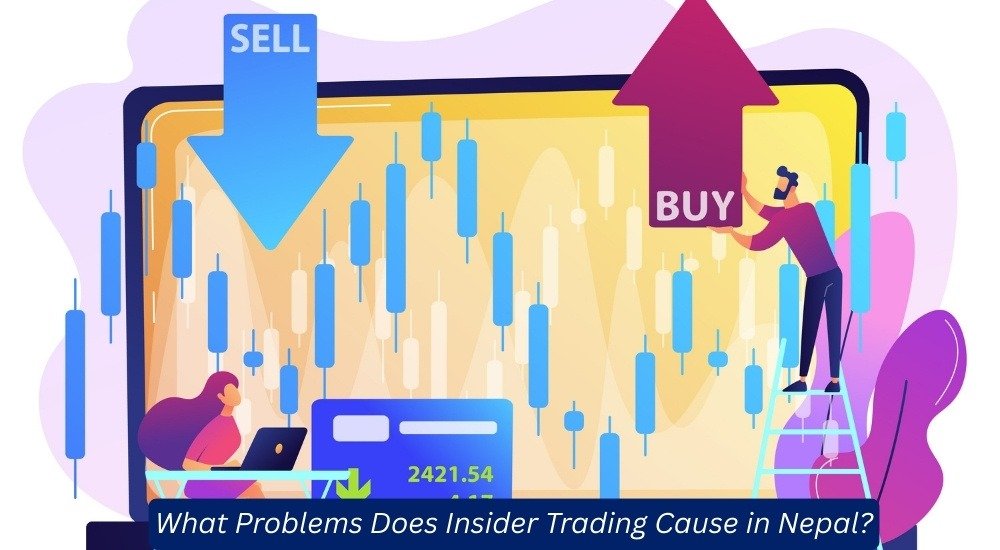
What Problems Does Insider Trading Cause in Nepal?
Insider trading creates serious challenges in Nepal’s securities market. It undermines fairness, allowing a small group with privileged information to profit at the expense of ordinary investors.
This erodes public trust in the stock market and discourages participation. It also distorts market prices, making them reflect insider advantage rather than a company’s true performance.
Insider trading undermines fairness in the stock market. Ordinary investors, especially the middle class, who enter the market in good faith, may lose confidence when they realise that some individuals or entities have access to inside information.
This leads to a sense of inequality, with only a select few benefiting from the system while the majority of investors suffer from manipulated prices.
Low float stocks, those with a limited number of shares available for public trading, are particularly vulnerable to insider trading.
Since these stocks are less liquid, small trades can lead to significant price fluctuations. Insiders can take advantage of this and manipulate prices, often leaving unsuspecting investors with paper losses when the manipulated prices return to normal.
Insider trading distorts the market’s true value. The prices of stocks do not accurately reflect their actual business performance or fundamentals, instead, they are influenced by insider knowledge and market sentiment.
This undermines the integrity of the market and makes it more difficult for new investors to make informed decisions based on accurate data.
Retail investors are often at the mercy of insider trading, especially during times of high volatility or market speculation.
These investors may make investment decisions based on market movements that are not grounded in public information but in private knowledge exploited by insiders.
The aftermath of these activities often results in economic loss for everyday investors.
While Nepal has laws in place, enforcement has been inconsistent. There have been high-profile cases of insider trading, but the penalties often seem lenient or fail to deter.
The Securities Board of Nepal (SEBON) has been actively involved in trying to clamp down on these practices.
Still, the lack of robust regulatory frameworks has allowed insider trading to persist in the market.
Impact of Insider Trading in Nepal
The consequences of insider trading in Nepal are far-reaching. The market is primarily composed of middle-class investors, many of whom were introduced to the stock market during the post-COVID boom.
These investors often lack the experience or resources to spot market manipulation and are left at a disadvantage when insider trading occurs.
Insider trading creates an uneven playing field, where informed insiders can profit at the expense of uninformed retail investors.
This reduces trust in the stock market, discouraging new investors from entering and existing investors from staying engaged.
Moreover, insider trading can distort stock prices. For example, when insiders drive up prices in low float stocks, other investors may buy in, hoping for gains, only to face significant losses when the manipulated prices fall back to their true value.
What Can Be Done to Curb Insider Trading in Nepal?
To combat insider trading effectively and enhance the stock market environment, Nepal needs to adopt a multifaceted strategy encompassing legislative reforms, regulatory enforcement, technological innovation, and investor education.
The Securities (First Amendment) Bill, 2024, proposes stricter penalties for insider trading, including heavier fines and longer prison sentences.
Implementing these changes would send a clear message that insider trading will not be tolerated and that violators will face substantial consequences.
SEBON should invest in advanced market surveillance systems to detect unusual trading activities that might indicate insider trading.
Utilising technologies such as Artificial Intelligence (AI), SEBON can identify manipulative patterns and investigate suspicious trades more efficiently.
Furthermore, blockchain technology could be implemented to ensure transparent, immutable transaction records, making it easier to trace and detect irregularities.
Nepal must ensure that regulatory bodies, such as SEBON and Nepal Rastra Bank, as well as other financial institutions, collaborate more effectively.
This can be achieved by establishing cooperative frameworks that enable the sharing of information about suspicious transactions across authorities, thereby helping to close regulatory loopholes that insiders might exploit.
To protect vulnerable low float stocks, the government could enforce stricter minimum float requirements for listed companies.
Additionally, installing circuit breakers could prevent drastic price movements driven by factors other than market fundamentals, making it harder for insiders to manipulate prices.
Educating investors on the signs of insider trading and providing avenues to report suspicious activities is crucial.
SEBON should also establish whistleblower protection mechanisms to encourage individuals with knowledge of insider trading to come forward without fear of retaliation.
Why Should Nepal Care About Curbing Insider Trading?
Insider trading affects not only individual investors. It damages the credibility and integrity of Nepal’s entire stock market.
The goal is to create a level playing field where all investors, regardless of their size, have access to the same information and are protected from market manipulation.
For Nepal to establish a sustainable and attractive stock market that fosters investor confidence, it is essential to implement robust regulatory practices.
Failure to address insider trading effectively could deter future investment, destabilise the market, and ultimately harm Nepal’s growing middle class, which relies on stock market investments for financial growth.
Conclusion
Insider trading remains a persistent issue in Nepal, particularly in the rapidly expanding retail investor market.
While SEBON has made strides in regulating the issue, there is still much to be done to build a truly transparent and fair stock market.
Stronger penalties, improved surveillance, regulatory coordination, and education are key solutions to mitigate the impact of insider trading on Nepal’s stock market.
By implementing these solutions, Nepal can safeguard the interests of its investors and foster the development of a more robust and trustworthy financial market.
If you are an investor in Nepal, it is crucial to be vigilant about insider trading and to understand how to identify signs of market manipulation.
Stay informed about the latest market trends, regulations, and reforms introduced by SEBON to combat these issues.