PR System and the Sainte-Lague Method: Nepal Election 2082

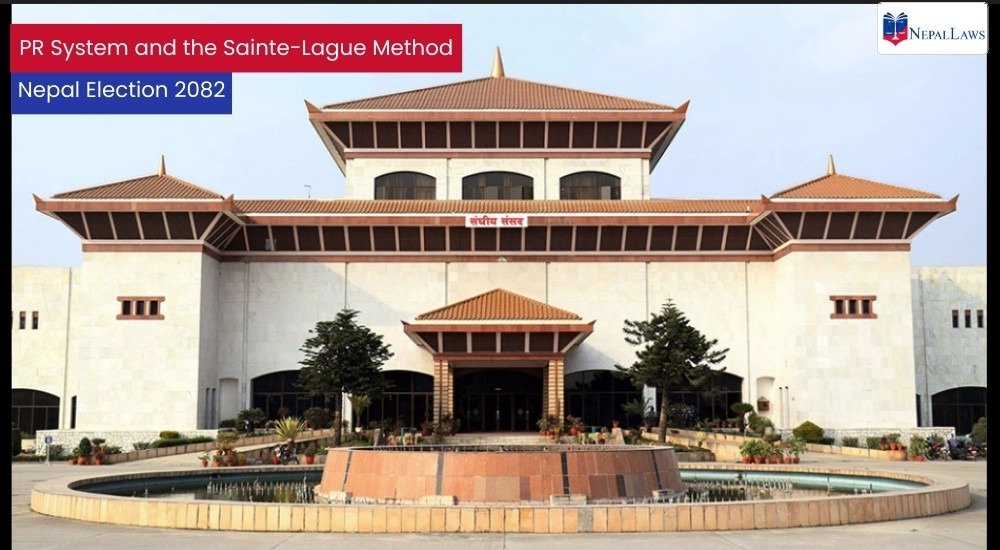
Elections are the backbone of any democratic system, providing citizens with the opportunity to have their voices heard through voting. In Nepal, the electoral system is multifaceted, comprising a First Past-The-Post (FPTP) system and a Proportional Representation (PR) system, each playing a vital role in selecting representatives to the Federal Parliament. The PR system ensures that even smaller parties and marginalised groups are adequately represented in the legislative process. In this article, we will break down the election process, focusing on how the Sainte-Lague method is applied to allocate proportional seats in Nepal’s parliament, and how diversity and inclusion are ensured through specific constitutional provisions.
The Two-Tier Election System in Nepal
In Nepal, elections for the Federal Parliament are held using a mixed-member proportional (PR) system. This means that there are two types of representatives:
First-Past-The-Post (FPTP)
165 members of parliament (MPs) are elected from specific constituencies across the country, with each constituency electing the representative who receives the most votes.
Proportional Representation (PR)
The remaining 110 MPs are elected under the Proportional Representation (PR) system, which reflects the proportion of votes cast for each party, ensuring more equitable representation across political groups.
In this mixed system, a voter casts two votes: one for a candidate in their local constituency (FPTP) and the other for a party in the PR system.
Stepwise Allocation Proportional Representation Seat in Nepal
This innovative electoral system is designed to ensure that every voice is heard and represented in the political landscape. Dive into the intricacies of how this method works to create a more balanced and fair representation of Nepal’s diverse population. Here are the steps followed by Nepal to divide 110 seats among political parties by the PR system:
Step 1: Calculating Valid Votes
Before any proportional seats can be allocated, it is crucial to calculate the total number of valid votes in the PR system. These are the votes that meet the necessary criteria, excluding invalid or voided ballots. In the 2022 election, the total number of valid votes cast for the PR election was 10,830,815, according to the Election Commission of Nepal.
Step 2: Determining the 3% Threshold
For a party to be eligible for proportional representation seats, it must surpass a minimum threshold of 3% of the total valid votes. This threshold ensures that only parties with a substantial number of votes are awarded proportional seats, preventing the fragmentation of the legislature by numerous small parties.
To calculate the 3% threshold:
- Total valid votes = 10,808,701
- 3% of total valid votes = 325,051 votes
Any political party that secures fewer than 325,051 votes is excluded from receiving proportional representation seats. This safeguard ensures that only parties with a reasonable level of support have a chance to be represented in the federal parliament.
Step 3: Parties That Surpassed the 3% Threshold
In the 2026 election, six political parties exceeded the 3% threshold and became eligible for PR seats. These are:
- Rastriya Swatantra Party – 5,183,493 votes
- Nepali Congress – 1,759,172 votes
- Nepal Communist Party (UML) – 1,455,885 votes
- Nepali Communist Party – 811,577 votes
- Shram Sanskriti Party – 385,856 votes
- Rastriya Prajatantra Party – 330,684 votes
While 64 political parties submitted their closed lists of candidates to the Election Commission, only these six parties met the 3% threshold and thus qualified for proportional seats in parliament.
Step 4: Seat Allocation Using the Sainte-Lague Method
The Sainte-Lague method is used to fairly allocate 110 proportional-representation seats among the qualifying parties. This method uses a mathematical formula that divides each party’s total votes by a series of odd numbers: 1, 3, 5, 7, 9, and so on.
The formula for the Sainte-Lague method is as follows:
Result =
V
2s+1
Where:
- V = The total number of valid votes received by the party.
- s = The number of seats the party has already been allocated in previous rounds (which starts at 0).
The allocation process continues until all 110 proportional seats have been filled. Let’s break this down step by step with the votes each party received:
Step 4.1: Initial Round (First Seat Allocation)
We begin by dividing the total votes received by each party by (the first divisor in the Sainte-Lague method):
| Round | Rastriya Swatantra Party | Nepali Congress | Nepal Communist Party (Unified Marxist-Leninist) | Nepali Communist Party | Winner of Seat |
|---|---|---|---|---|---|
| 1 | 5,183,493 (÷1) | 1,759,172 (÷1) | 1,455,885 (÷1) | 811,577 (÷1) | Rastriya Swatantra Party |
| 2 | 1,727,831 (÷3) | 1,759,172 (÷1) | 1,455,885 (÷1) | 811,577 (÷1) | Nepali Congress |
| 3 | 1,727,831 (÷3) | 586,391 (÷3) | 1,455,885 (÷1) | 811,577 (÷1) | Rastriya Swatantra Party |
| 4 | 1,036,699 (÷5) | 586,391 (÷3) | 1,455,885 (÷1) | 811,577 (÷1) | Nepal Communist Party (Unified Marxist-Leninist) |
| 5 | 1,036,698 (÷5) | 586,391 (÷3) | 485,295 (÷3) | 811,577 (÷1) | Rastriya Swatantra Party |
Note: The date is taken from the Election Commission of Nepal
In the following rounds, the total votes for each party are divided by 3, 5, 7, and so on, until all 110 seats are allocated. By the end of this process, the final allocation in the PR system looks as follows:
Step 5: Ensuring Diversity and Inclusion
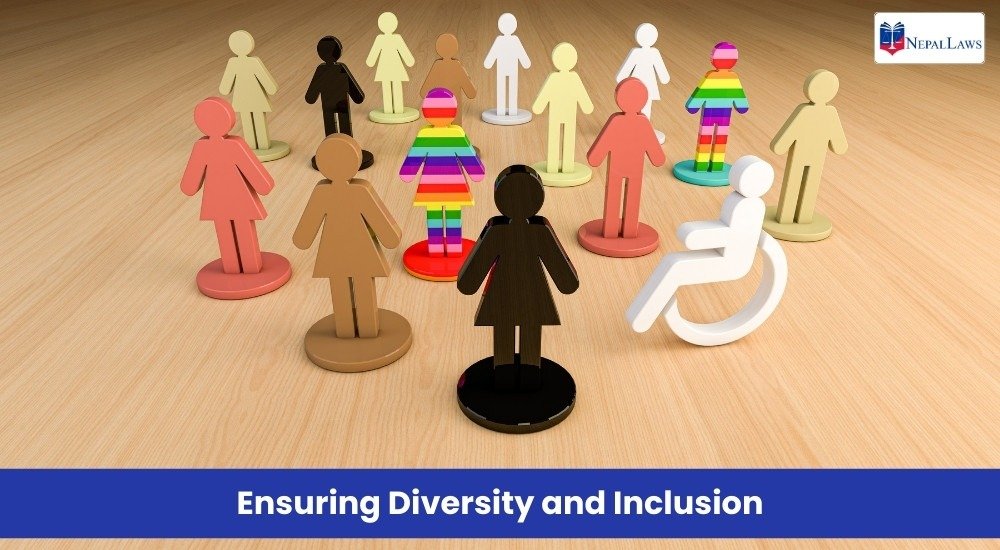
One of the defining features of Nepal’s electoral system is its commitment to diversity and inclusion. To reflect the country’s multicultural makeup, the Constitution of Nepal ensures that proportional representation accounts for gender and ethnic diversity.
The constitution specifies that each inclusive cluster based on ethnicity and gender must be properly represented in the proportional seats. The clusters are as follows:
- Khas-Arya: 31.2% of total seats
- Adivasi Janajati: 28.7% of total seats
- Madhesi: 15.3% of total seats
- Dalit: 13.8% of total seats
- Tharu: 6.6% of total seats
- Muslim: 4.4% of total seats
Additionally, at least 50% of the representatives in each cluster must be women. This provision is crucial to ensuring that marginalised and underrepresented communities have a voice in the Sangha (Parliament), thereby enabling the proper inclusion of women and ethnic minorities in the legislative process.
This feature of the proportional representation system is what makes it an inclusive democracy, bringing the voices of rural and marginalised communities to the political forefront and promoting equality and fairness.
Conclusion
Nepal’s election system, particularly the Proportional Representation (PR) system process, is designed to ensure fair and equitable representation in the Federal Parliament. By using the Sainte-Lague method, the system ensures that even smaller parties and underrepresented communities receive a voice in the legislative process, thereby strengthening the foundation of Nepal’s democracy.
Moreover, through constitutional provisions that promote diversity and inclusion, the electoral system fosters a more inclusive democracy, providing a platform for marginalised groups, including women, ethnic minorities, and rural populations, to participate in political discourse and decision-making.
This PR system not only strengthens Nepal’s democracy but also sets a positive example for other nations striving to build a more equitable and inclusive political environment.

Babita
Babita is a law student with a keen interest in property accountancy and legal compliance. She contributes insightful, well-researched articles that reflect a fresh and analytical perspective on evolving legal matters.
View all postsGet the latest on laws and elections in your inbox.