Parliamentary Hearings in Nepal: A Democratic Process to Ensure Accountability

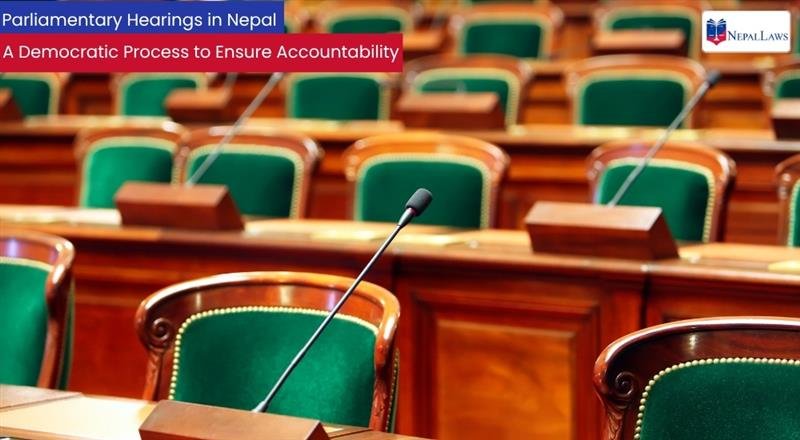
In any democratic system, the power of the government is held accountable by the people, and one critical mechanism for doing so is examining and scrutinising the appointments of key officials. In Nepal, the parliamentary hearings process is a vital part of this democratic mechanism. Through parliamentary hearings, the legislature helps ensure that the government is not only efficient and capable but also honest and transparent in its appointments to public office. This process guarantees that the individuals appointed to high offices in Nepal are qualified and deserving of the positions they are to occupy.
What Are Parliamentary Hearings?
Parliamentary hearings in Nepal are an essential democratic process that aims to scrutinise individuals nominated by the executive for important public office. These positions may include the Chief Justice, judges of the Supreme Court, members of the Judicial Council of Nepal, chiefs and members of Constitutional Bodies, who are appointed on the recommendation of the Constitutional Council and even ambassadors. The main objective is to ensure that these individuals are qualified, competent, and honest enough to handle positions of public importance.
Legal Framework for Parliamentary Hearings in Nepal
The foundation for parliamentary hearings in Nepal is laid out in Article 292 of the Constitution of Nepal 2072.
According to Clause (1) of this Article, parliamentary hearings are mandated for appointments to key offices, including the Chief Justice and judges of the Supreme Court, members of the Judicial Council, officials of constitutional bodies, and ambassadors. These appointments are made based on the Constitutional Council.
Additionally, Clause (2) specifies that a joint committee, made up of members from both Houses of Federal Parliament, is responsible for carrying out the parliamentary hearings. The committee consists of 15 members and is tasked with evaluating the qualifications and suitability of the proposed individuals for their respective positions.
Formation of the Parliamentary Hearings Committee
As stipulated in the Constitution and the Federal Parliament’s Joint Sitting and Joint Committee (Conduct of Business) Rules, the parliamentary hearings committee is formed by selecting members from both the House of Representatives and the National Assembly. The committee consists of 15 members, including 12 from the House of Representatives and 3 from the National Assembly. The respective houses of parliament confirm these members.
Role of the Chairperson
According to the Federal Parliament’s Joint According to the Federal Parliament’s Joint Sitting and Joint Committee (Conduct of Business) Rules, the committee is tasked with electing its Chairperson from among its members.
The chairperson plays a crucial role in overseeing parliamentary hearings, ensuring that all decisions are made in accordance with legal provisions and that hearings are conducted smoothly and transparently.
The parliamentary hearings committee scrutinises appointments to key positions across the judiciary, constitutional bodies, and diplomatic service.
Chiefs of constitutional bodies
Heads and key office-bearers of constitutional commissions
Justices of the Supreme Court bench
Appointed via Constitutional Council recommendation
Members of the Judicial Council
Oversight body for judicial conduct and discipline
Chief Justice
Appointed via Constitutional Council recommendation
Ambassadors
Nepal's diplomatic representatives abroad
The Committee’s Meetings and Quorum
The Chairperson of the committee has the authority to call meetings whenever necessary. The committee is empowered to hold meetings to discuss and decide on nominations for the key positions mentioned earlier. The committee has a responsibility to ensure that it conducts thorough investigations into the qualifications, backgrounds, and conduct of the proposed individuals.
According to the parliamentary rules, for a committee meeting to be considered valid, at least 51% of the total number of members must be present. This ensures that decisions made by the committee are representative and well-informed.
Decision-Making Process
The committee follows a clear process for making decisions regarding the nominations. Firstly, if a nominee’s name is not rejected by a two-thirds majority of the committee members, the nominee is considered confirmed. In the event of rejection, the committee must provide reasons for the rejection to ensure transparency and accountability in the decision-making process.
Functions, Duties, and Powers of the Parliamentary Hearings Committee
The parliamentary hearings committee in Nepal has several essential duties and powers to ensure that the hearings process is thorough and fair. These include:
Publication and communication
Nominee names are published and transmitted to the general public, ensuring the process remains open and visible.
Receiving complaints
Grievances or complaints filed against any nominee are formally received and logged for investigation.
Scrutinising grievances
All complaints received are evaluated carefully to ensure only the most qualified individuals advance to appointment.
Inviting nominees and complainants
The committee may summon the nominee, complainant, or any relevant party to present arguments at the hearing.
Investigating further
The committee can request additional documents from government bodies to probe a nominee's background, qualifications, and conduct.
Decision on appointment
Based on full scrutiny, the committee decides whether the appointment is appropriate — and may recommend rejection if the nominee is found unsuitable.
Forwarding decisions
The committee's recommendations are formally forwarded to the responsible body, which then makes the final appointment.
Importance of Parliamentary Hearings
The parliamentary hearings process serves several key purposes in Nepal’s democratic system:
Ensuring Qualified Appointments
Through a meticulous examination of each nominee’s background and qualifications, the committee ensures that only those who meet rigorous standards are selected for positions of authority and influence. This thorough vetting process not only evaluates educational achievements and professional experience but also considers ethical backgrounds and proven track records, ensuring that only the most competent and principled candidates secure these important leadership roles.
Promoting Accountability
The hearings process serves as a crucial mechanism for holding the executive branch accountable for its nominations. This process ensures that the government cannot unilaterally appoint individuals who may be unfit for their roles or have a history of corruption. Through rigorous questioning and thorough evaluations, the hearings provide a transparent platform to assess the qualifications and integrity of nominees, safeguarding the public interest and reinforcing the need for ethical governance.
Strengthening Democracy
Parliamentary hearings strengthen the democratic process by allowing the legislature to play a proactive role in overseeing appointments to key public offices. This ensures that the appointments are not based on political favouritism or personal connections.
Conclusion
Parliamentary hearings in Nepal are a crucial component of the democratic process, providing an important check on the executive’s power to appoint individuals to public office. The hearings ensure that only qualified and trustworthy individuals hold positions of power, contributing to a more accountable, transparent, and efficient government. While challenges exist, the system holds significant promise for improving governance and strengthening Nepal’s democracy. Through continued public engagement, transparency, and a focus on merit-based appointments, the parliamentary hearings process can play a transformative role in shaping the nation’s future.

Babita
Babita is a law student with a keen interest in property accountancy and legal compliance. She contributes insightful, well-researched articles that reflect a fresh and analytical perspective on evolving legal matters.
View all postsGet the latest on laws and elections in your inbox.